The Ambient Decision Engine Behind Account & Case Cohort Summary
Read More

Krishna Raja
CEO of SupportLogic and the author of “Support Experience”Support ticketing systems has been the undisputed system of record for enterprises for several decades. But in 2026, that facade is cracking. Popular support ticketing systems like Salesforce Service Cloud, Zendesk, Freshworks, and ServiceNow are now viewed for what they truly are: passive digital filing cabinets where critical customer insights go to die, with infrastructures too cumbersome to implement AI workflows.
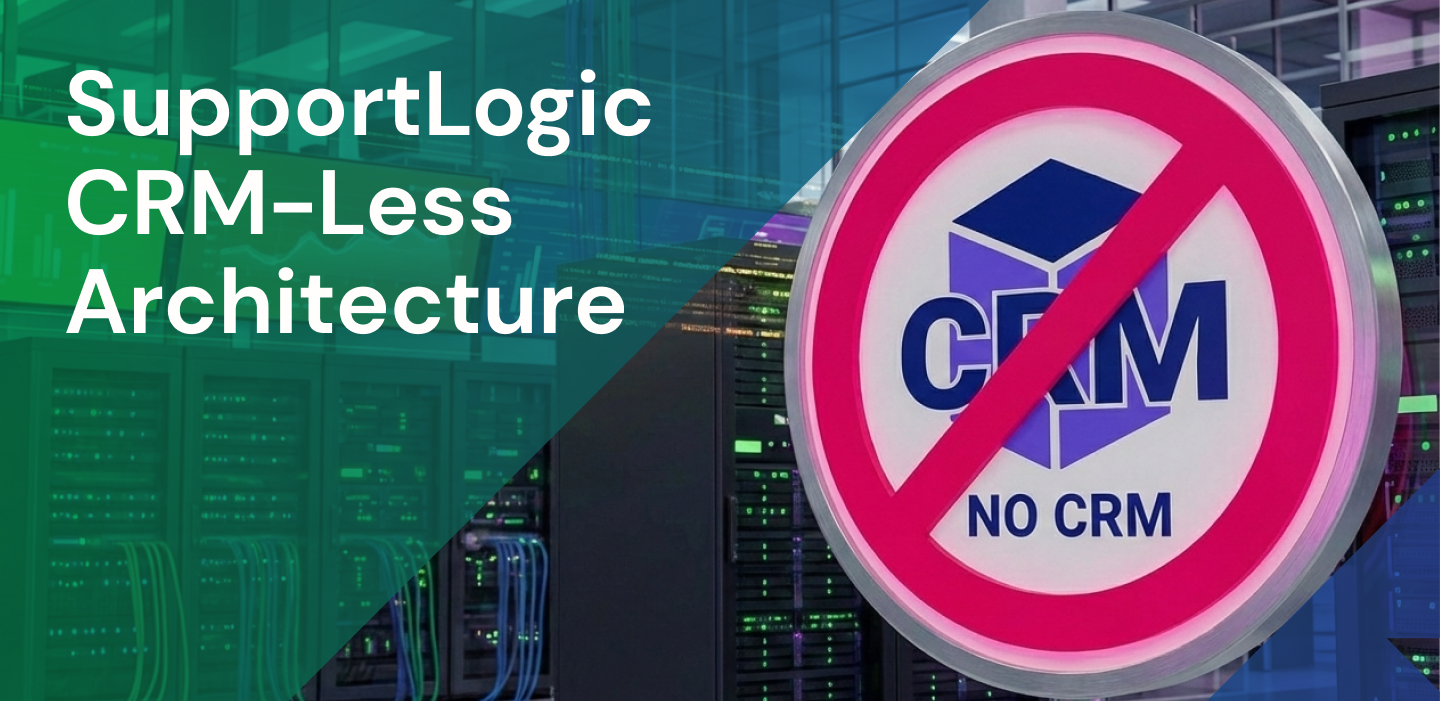
The center of gravity is now moving to Data Lake, and the action has moved to the AI Agents. In this article, I’ll explain why you must adopt a CRM-less approach with SupportLogic Ambient AI Agents and Snowflake.
Traditional Support CRMs are losing their grip because they were built during the SQL era for an entirely different purpose. Support leaders are waking up to these uncomfortable truths:
To move beyond the CRM requires an operational “brain” that allows you to bypass the limitations of your legacy ticketing system.
Seamless Overlay & Normalization: SupportLogic provides an overlay layer for your existing CRM. Whether your data is stored in Salesforce, Zendesk, Microsoft Dynamics, ServiceNow or even a proprietary on-prem CRM, SupportLogic seamlessly integrates, migrates your data and normalizes the schema without modifying the source. To top it all, SupportLogic can deploy on this on a dedicated VPC that is secure and complies with the highest security and privacy standard requirements of enterprises.
Omni-Channel Native: While CRMs struggle with anything that isn’t a ticket, SupportLogic integrates directly with Voice, Zoom, and Slack, transcribing and analyzing technical sentiment in real-time.
Precision RAG Customer Portal: Moving beyond simple “keyword search,” SupportLogic offers a next-gen portal using Precision Retrieval-Augmented Generation (RAG). It allows your end customers to ask questions in natural language and deflects issues with surgical accuracy by pulling from documentation and historical support tickets. It also provides a seamless interface to open support tickets.
The AI Copilot Interface: Your agents no longer need to live in a clunky ticketing UI. SupportLogic provides a dedicated workspace with:
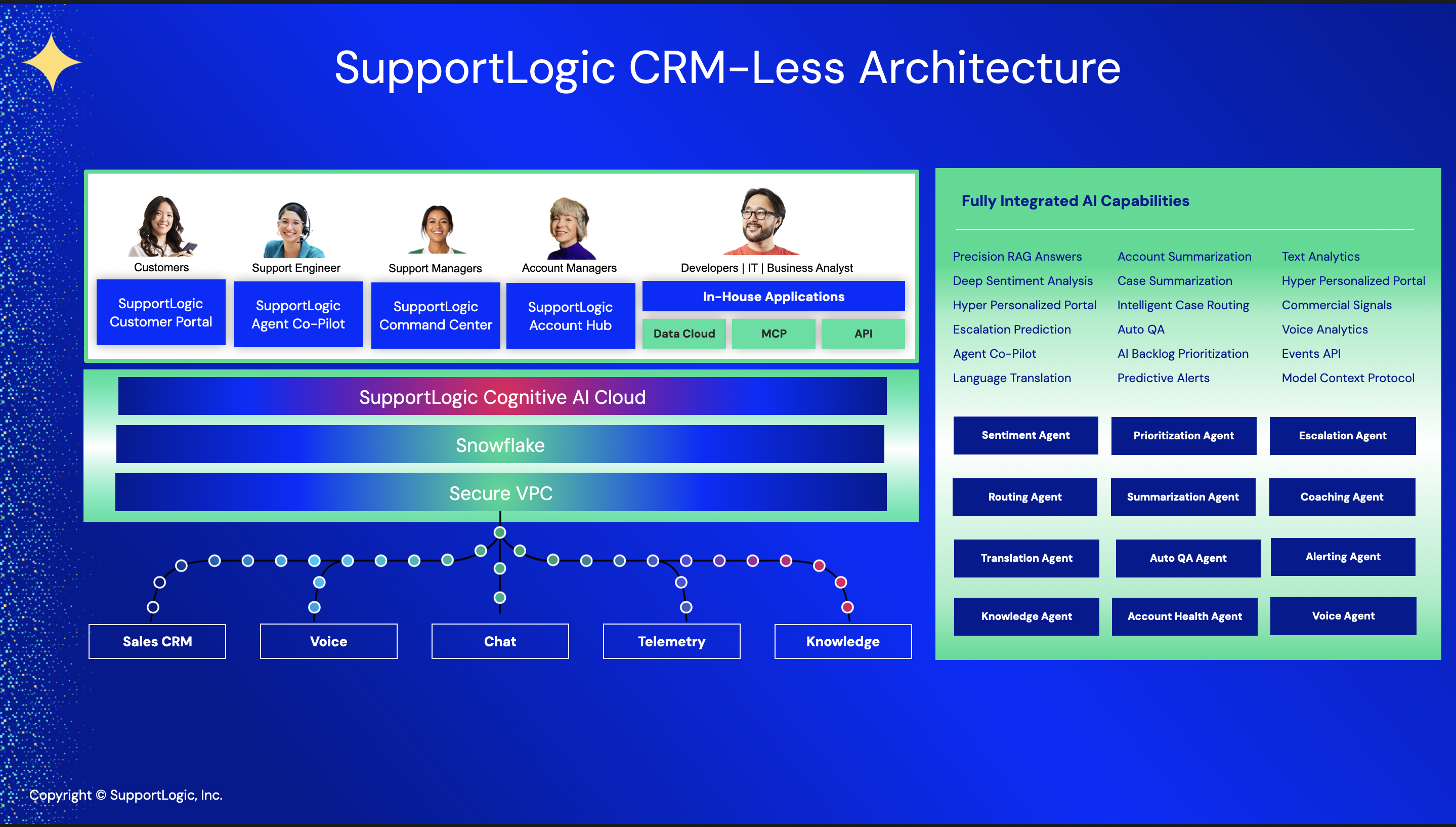
The secret to this transformation is migrating your existing support data into Snowflake. SupportLogic handles this transition for you and you don’t need to be an existing Snowflake user. SupportLogic provides a Snowflake instance on your behalf and provides you direct access to the raw data, normalized data and as well as the intelligence extracted from this data via SupportLogic Data Cloud. This allows you to use the Snowflake ecosystem to do automation. For instance some of our customers are using SupportLogic Data Cloud to:
With the recent launch of Snowflake Intelligence, now you can directly query SupportLogic Data Cloud in natural language for trends and insights buried in your data lake. By combining SupportLogic’s normalized support signals with Snowflake Intelligence, leaders can now “ask” their data: “Show me all high-churn-risk accounts that have also seen a 20% spike in ‘frustration’ signals last month.” The data never leaves the secure, governed perimeter of Snowflake, eliminating the privacy risks inherent in exporting CRM data to third-party AI tools.
Here is your 3-month blueprint for a CRM-less architecture:
In 2026, the leaders who win are those who stop investing in “digital filing cabinets” and start investing in proactive intelligence. The CRM is no longer the center of the universe, it’s just one of many inputs for a smarter, faster, Snowflake-driven operation.
Stop fighting your CRM and start outsmarting it. Schedule a demo of the SupportLogic + Snowflake integration today.
Want the latest B2B Support, AI and ML blogs delivered straight to your inbox?